
The Cremation of the IX Raja of Peliatan, Ida Dwagung Peliatan
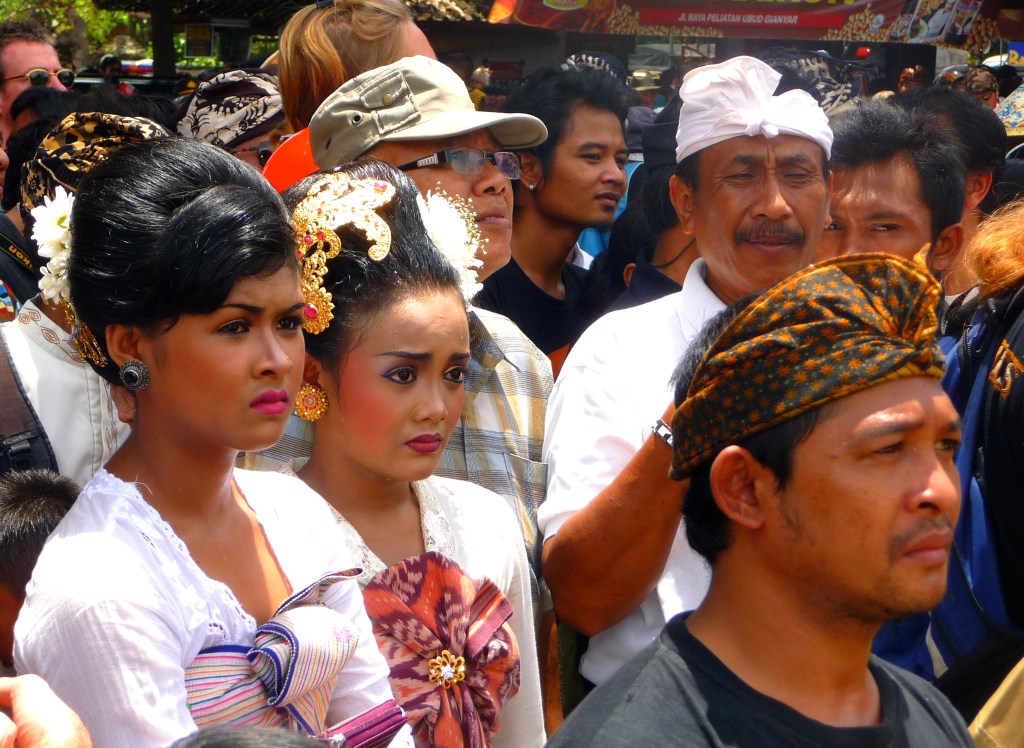
Tightly packed crowds, suffocating heat. The streets are throbbing with with noise, colour and culture. The Balinese populace are dressed in their best. Formal sarongs; the men in their crispy white shirts and formal turbans or bandanas; the girls exquisite in their lacy blouses, colourful sashes, ornate headpieces, with immaculate coiffure and makeup. Drooping tourists under hats, clutching water bottles, fans and cameras. It was elbow room only. Street vendors jostled through the crowds selling snacks and drinks; the money and wares being passed over the heads of the crowd. I was here to watch the people of Bali mourning their king, and enacting the rituals to send him on his journey into the next realm with love, devotion, respect and glory.
Bali is traditionally Hindu, but with additional strong flavours of Buddhism and good healthy doses of Animism and Ancestor Worship. All this contributes to the beautiful gentle nature of the Balinese people but for events such as this, combine to become a cultural spectacle of sound, colour, and reverential glory.
There were three edifices.
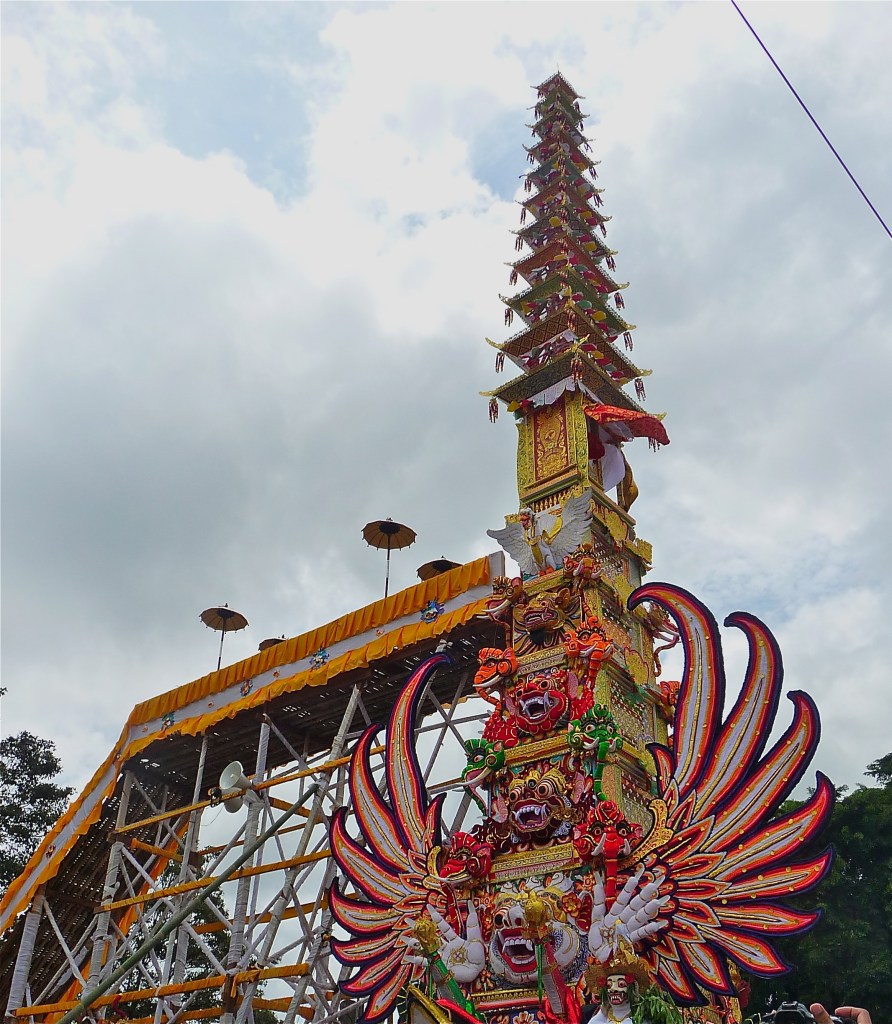
The Funeral Tower. or Bade, represents the symbol of the Universe and is over twenty metres tall; the purpose to transport the body to the cremation site. The more important the person, the higher the tower and this one was over twenty metres tall. The assembly of the processional creatures was still in progress when we arrived, so many hours were spent observing the construction and the general too and fro of various officials, hundreds of workers and people watching in general. Finally, the body was transferred along the ramp from the palace into the highest chamber. The coffin was lashed firmly into place with cloth strips by various young men (most un-reverentially, and very much in stark contrast to the rest of the proceedings). Fabulously dressed priests chanted ancient verses to a cacophony of jangling music and gongs amid the haze and smell of incense. Laymen type officials boomed commentaries over blowers, just to add to the noise.
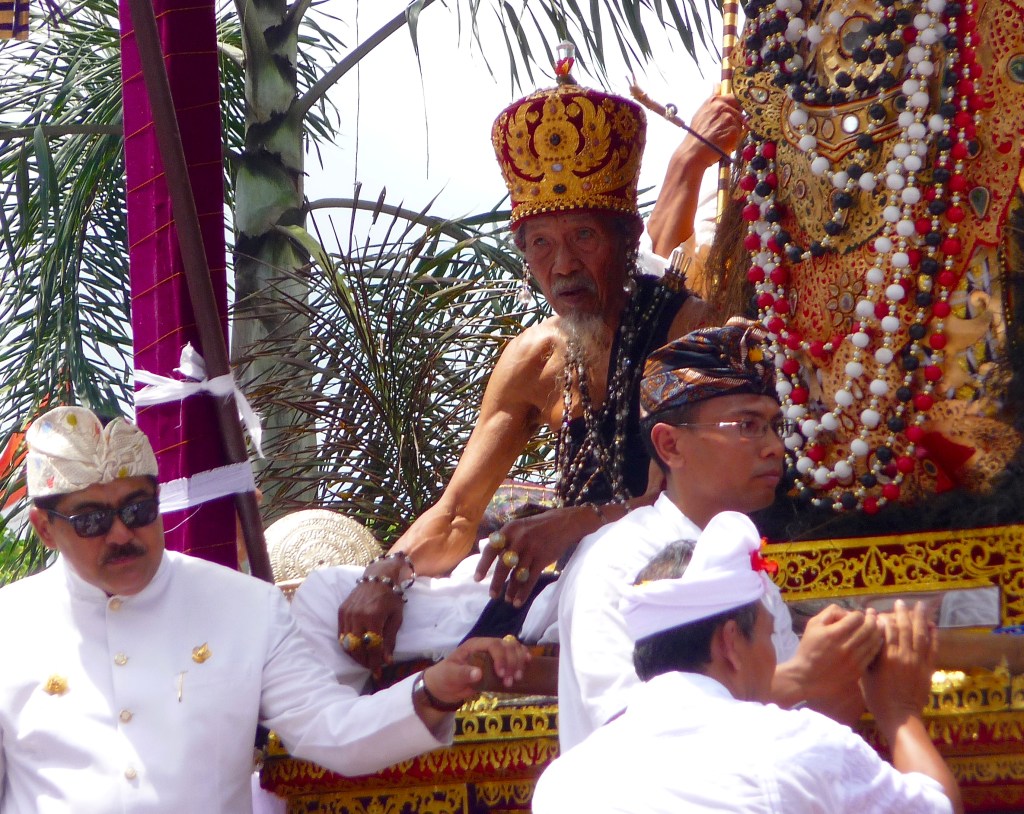
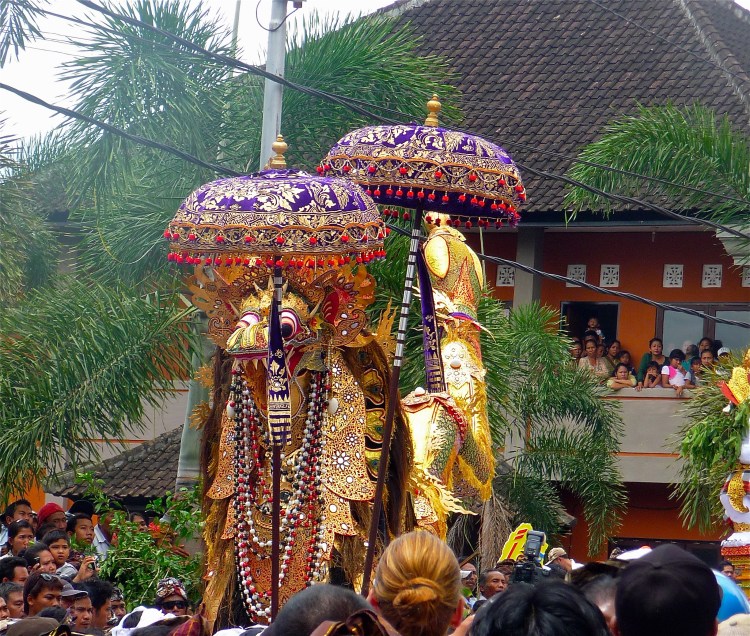
The Dragon (Naga Bunda) precedes the Tower and is the symbol of life. Apparently when the cremation site is reached, high priests would shoot arrows into it to release the soul.
Leading the procession is the Cow, or Lembu; my personal favourite. This is the actual sacrophagus which the body will be transferred into for cremation at the end of the journey.
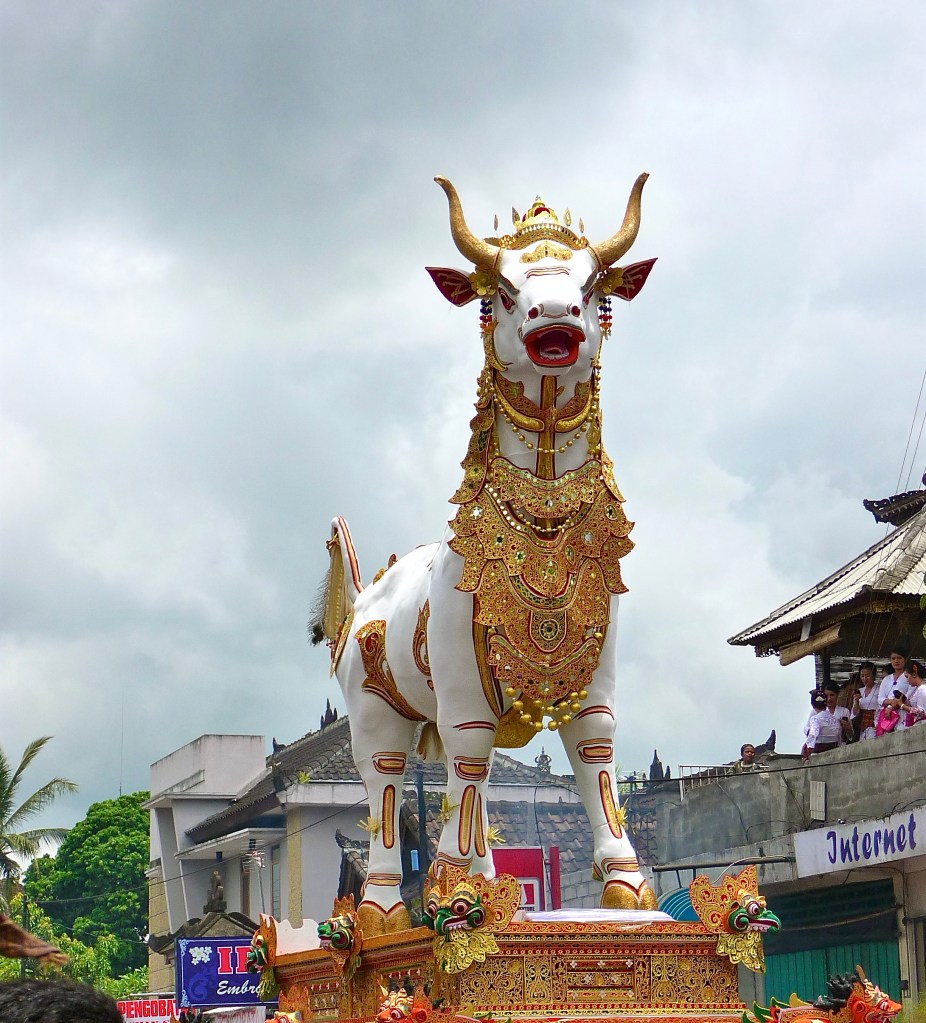
The three edifices are built upon bamboo poles and over a thousand men were commissioned to carry them along the processional route, alternating shifts every twenty metres or so, as they are obviously very heavy. They took the time at these labour change-overs to twist and turn, sometimes in a complete circle, ensuring that the spirit is confused and cannot return home.
It was at this point when the procession started to move, that I had to take my leave. I had mixed emotions about this. I had already been standing in this pressing crowd for over 5 hours. It was becoming increasingly hard to get a decent view, the heat was abominable, I was hungry and thirsty. There was still a long way to go with the proceedings so I put it under the “c’est la vie” heading and regretfully left.
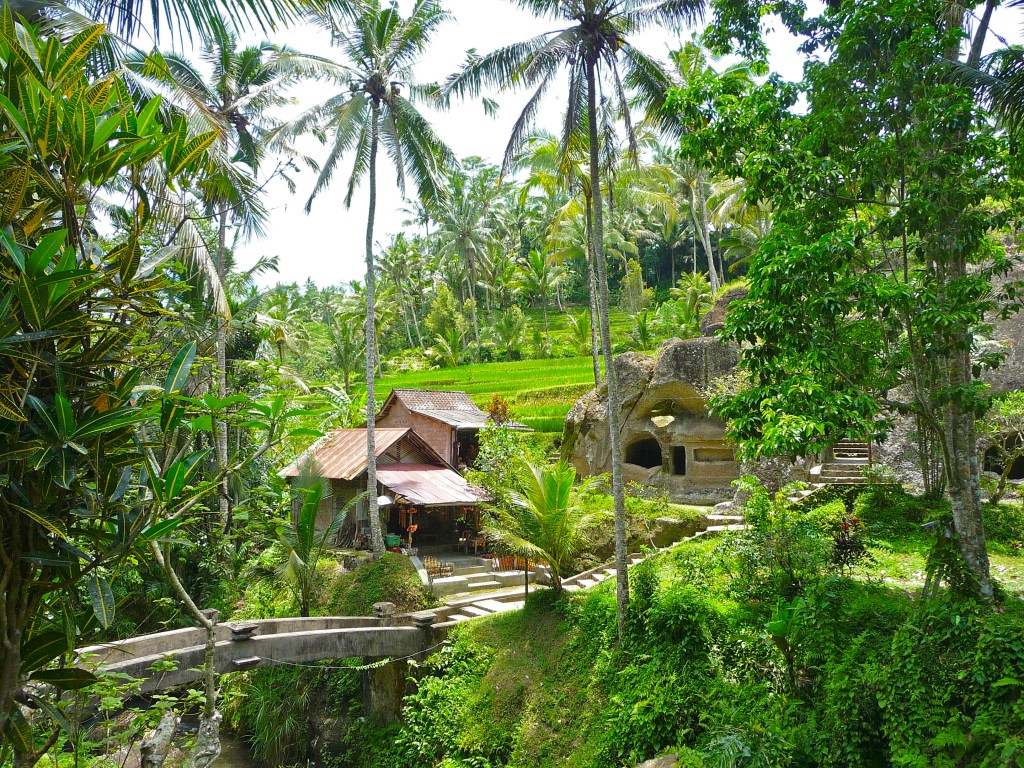
Whilst on the drive home and passing through a small village we came across another funeral. A small wooden stand was erected in the corner of a dusty compound merely metres away from the family home. The high flames had died and there remained only a small group of mourners standing slightly back from the gently burning pyre; the charred body clearly visible through the whiffs of low flame and smoke. The natural hues of the house and yard and the sombre clothing of the mourners was only broken by the occasional splash of colour from a flower or trinket that had escaped the flames.
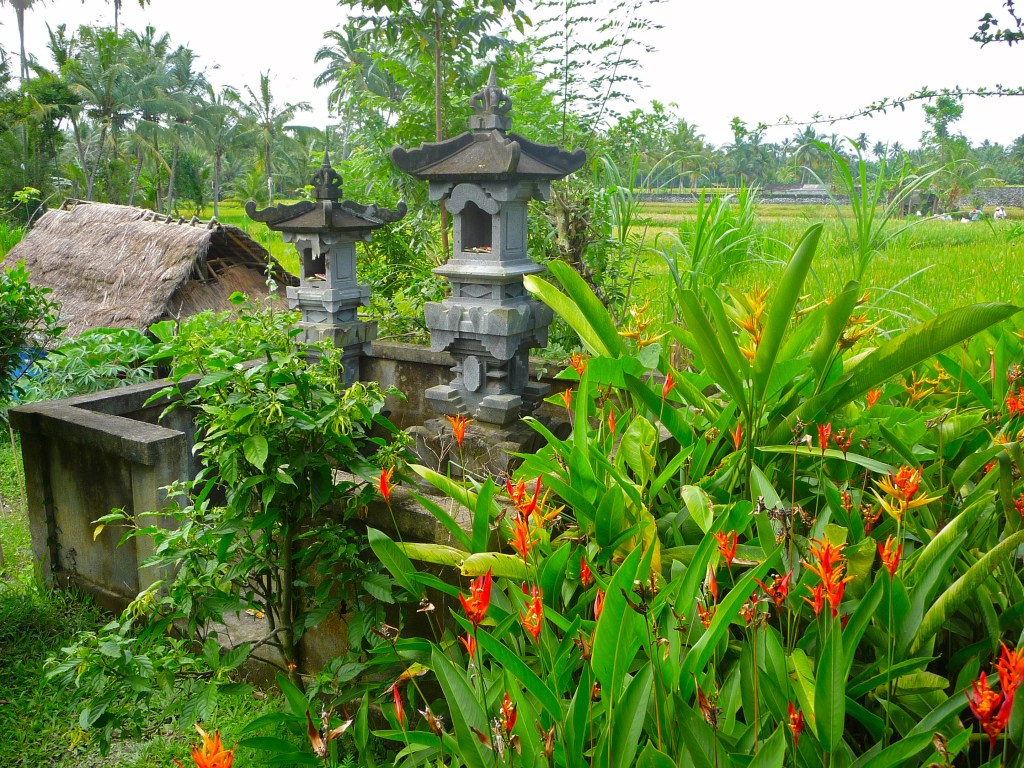
It was a poignant window into daily village life and the stark simplicity of the scene only seemed to add to the solemnity of the occasion. It seemed to be more personal and real than all the wondrous pomp and ceremony that I had just left. I was grateful to have seen this small interlude. The quiet visual impact and insight helped diminish my disappointment at not being able to attend the full ceremony for the King.
 truintraveltales.com